I is for Ignorance.
“Meditation, how relaxing, lucky you,” is the common response.
Lucky, yes. It is a privilege to have found a technique for development and growth, easily practised, using tools freely provided by the body and mind. Relaxing, on the other hand, it is not.
Ten days of silence, of eating two simple meals a day, of waking at four, lights out at ten. No reading, no music, no television, no cosmetics or jewellery, no brightly coloured clothing, no t-shirts with slogans, no running, no jumping, no smoking, drinking or drug taking, no sex, no shouting and no pets allowed. Just silence. Silence for all the senses. The accommodation is good, but simple. The food is nourishing, wholesome and enjoyable. The facilities are clean and the general situation is pleasing. There are woodlands surrounding a grassy walking area, nature in its seasons is nurtured and allowed space to be. Close encounters with song birds, rabbits, squirrels and other everyday spectacles are frequently seen by all, the air is light.
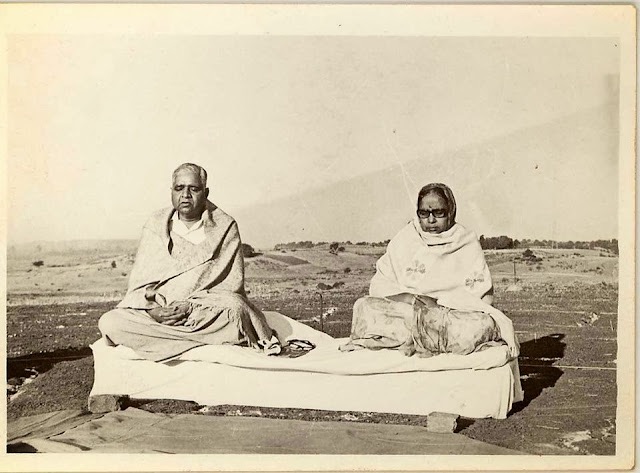
A bell rings as a dividing curtain is drawn for segregation of males and females. Silence starts and all students move to the meditation hall. Names are called and each individual walks into an enormous hall, one at a time. Arranged on the floor are two hundred mats, all neatly laid out in two areas. The mat is big enough to sit cross-legged, it is comfortable. There is a blanket to wrap up in and a cushion upon which to sit. When all two hundred students are sat and the noise of settling softens, an audio starts beginning to describe the practice. A deep male voice, friendly and warm, talks about the posture of the body, “Sit cross-legged, with a straight back supporting the neck.” He continues, “Relax the spine, so being alert, it holds the head upright and still.” As eyelids shut down, silence falls a little deeper. With the mouth closed and breathing though the nose, attention of the mind is focused on the movement of the breath as it travels in and out of the body, up and down through the nostrils.
Meditation is such an extraordinarily unique experience that there is little more on which to comment, other than to describe the rhythm of daily routine. The days are long and tiring, meditation is broken by rest periods of walking and eating. Sleep divides the days that lead one into the other, ever flowing, allowing time for practice and more practice. On the first night, bed triggers the start of a timetable focused around the practice of meditation. This day has been about travel, arriving and meeting new experience. Rest is a welcome comfort. The lights go out at ten and, in silence, sleep falls. At night, over the centre, as with everywhere else, the stars shine in the dark sky. Seen or unseen, clouded by atmospheric conditions or by closed eyes and bed blankets, the moon passes, waxing or waning in its traveling, ever changing in its stillness. Like the interaction between body and mind, night is both restful and energising. Sleep comes and goes, dreams and no dreams fill the space of the sleeping mind. Breathing continues; turning and not turning, the body lies between sheets and duvet. Every moment changing, yet appearing to stay the same.
A bell rings and sleep ends. It is four o’clock and the day begins. At four thirty the first meditation session starts. The hall is dimly lit and cool. Mats are populated by bodies, and blankets are pulled to the neck in silence. Stillness returns to the room; mind focusing on breath. An unfamiliar sound - that of silence. Everyday life is so full of clutter. Creations of all sorts fill the remotest pockets of space with noise, smells, taste and vibration. Spectacular displays lure the lusty into temptation, pleasure and displeasure. In the absence of all but the most essential distraction, there is a calm that emerges, an ever present stillness to which all will return. A cough breaks the silence, followed by a chorus of sniffing and more coughing. Birdsong heralds the dawning day, another bell and breakfast. It is now six thirty.
Nobel silence remains throughout. Eye contact with others or touch is avoided, hand gestures and all non-verbal communication is not noble silence. Meals are selected from a buffet and eaten in silence. Empty plates are stacked on a trolley and the rest period continues. Walking is the popular pastime during these breaks. The body gets tired sitting cross-legged for long periods. Stretching the legs out with a walk is desirable. Arms and legs move, eyes look and ears listen, the body and mind fill with sensory delights. Flowers bloom, tree trunks tower and mammals rummage below in the undergrowth. Above the sky is bright in its blue vastness and puffy clouds surf the jet stream winds, high out of reach. Until the next call to meditation, eyes, ears, tongue, hands and mind indulge in an orgy of looking, hearing, tasting, smelling, touching and thinking!
As the day continues, with a clear distinction between meditation time and rest periods, noble silence becomes normal. A bell sounds to mark the start of each new segment, and each segment, be it meditation or rest, fills quietly with the sensation of breathing, eating, walking or washing. Of course, the ever present thinking mind tries to control and steer at all times. Meditation is not about trying to stop thinking but rather to focus mind and body into – out of ignorance.
Vipassana meditation is a technique of mind and body discipline described by Gautama Buddha around 500BC. During his training as a spiritual seeker, Gautama discovered that the teaching he had received fell short of the goal for which he searched. Over many years and under many different teachers, he learned craving led to misery. So, to remove misery, one should remove the source of craving. This practice very nearly took his life: the young, unenlightened man starved his body of any nutrition until a woman named Sujata found his weakened, emaciated body by the side of a river. She fed him rice-milk which restored his strength. Gautama continued his inquiry until enlightenment finally came. The discovery was that the body and mind are linked through sensation, as they are from mind to body, through sensation. Thus, in observing sensation, one observes the reality of mind and body as it is.
To sit a ten-day course such as this is to receive the seed of this teaching. But without a seed the tree cannot grow. Segments of the day roll over and over with short talks from the audio providing encouraging instruction. Slowly, as the days progress, by following the teaching, practising and resting, the silence deepens. The technique starts to unfold within the body, the mind can be seen as a wild animal out of control and dangerously untamed. Each day ends with a discourse from the teacher providing answers to questions not yet considered, filling gaps in understanding, telling stories to aid learning, discovering how, why or when. Night follows day, and day by day, hour on hour, minute to minute, each and every breath, every inhalation and every exhalation is spent observing the mind, observing the body. Observing the true nature of each moment as it happens, observing the changing nature of mind and body, and observing the changing nature of body and mind. Thus to observe sensation, one observes the reality of mind and body as it is.
And so it is, and like all who commented before this journey began, I too thought it would be relaxing. However, as life continues on its path, the upmost and indisputable discovery I have made is that the easier something is, the harder it is to do. This is an experience that repeats and repeats, year by year, week by week, hour by hour confounding its reality on the senses as they pass. So, for nine hours a day, ten days a year, I sit cross-legged on a mat huddled in a blanket, observing the flow of my own breath. Just to observe it.